
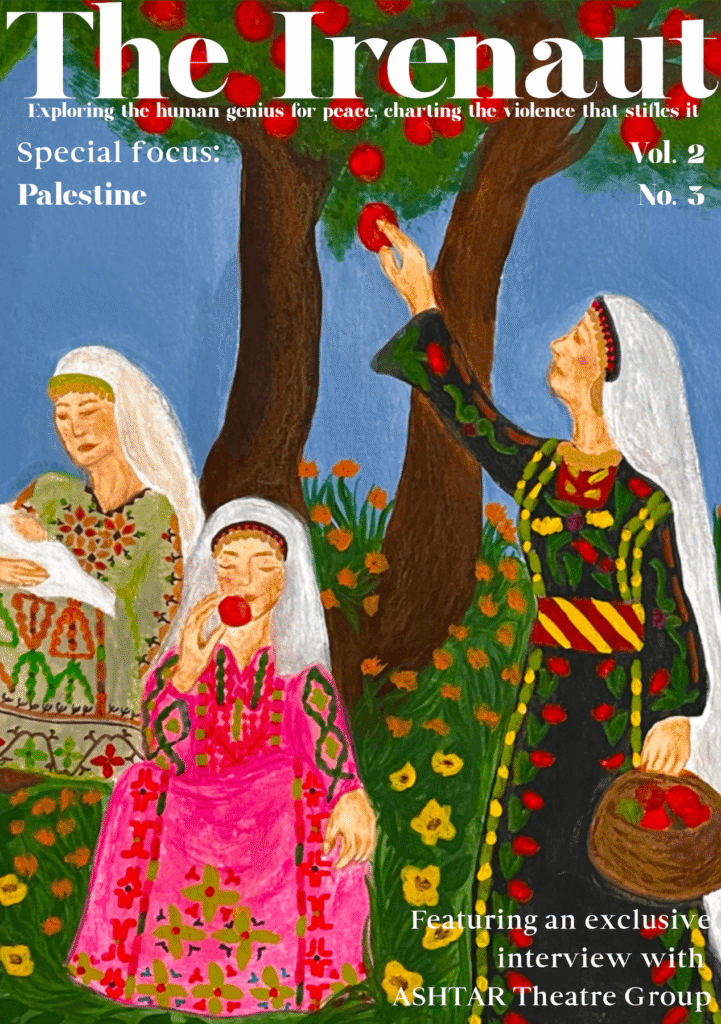
In Paradise, our walled garden, perfect order rules. Nothing changes, but subsists as created. Each thing holds its name close like a husk. From these we make name-chains and call them thoughts. We step always into the same river. Fruit is never unripe. There are no trajectories, no arcs of growth, because nothing can be anywhere but where and when it has to be. Possibility was created—Paradise is the sum of it; but not Otherwise, which it is a sin to think.
Paradise. A place where we’re free, as long as we recognise no other order; where we’re tenants until, by living, breathing, toiling, playing, we make the land our own—for which the penalty is eviction. Wanting to live was our catastrophe. Our fall, when we fell, was a tumbling through the tree of life onto this alien planet, where we met good and evil, and found them entangled everywhere: a world of value. Nothing flourishes in Paradise. It merely is—like a rock, a crystal. Here in the world of value, where we encountered flourishing, which is inseparable from pain, the anxiety of not being perfect still haunts us.
Flourishing doesn’t bring us closer to perfection, but keeps us safe from it. Perfection we all remember as it was. But flourishing? We ask each other often what it means. For one, it’s health, for another, offspring, for another, being buried alive with a small handbell. And yet it’s a shared dream.
How we should live here was obvious at first: whatever it takes to see another day. Then we grew away from the land in the dream of flourishing, and at some point on the paths of all our ways to flourish an orphaned conscience asks us: How should I live? And we wonder if these paths will one day converge in a unanimous answer, and whether this is something we should fear or hope for.
Few return to Paradise: tasters of other freedoms are chaos-bearers. Atop the walls, stand angels armed with fiery swords: soldiers, border officials, bureaucrats, politicians…. They know all exiles from Paradise carry chaos in our hearts and minds. For we imagine otherwise. That lineage of transgressive curiosity began with a question that became a world. We are that world.
Imagining otherwise is jeopardy, piercing hole after hole in any world, perfect or not; creating porous futures that may incubate monsters, or ooze with goodness—not quite in tongue’s reach, but already longed for. We can, if we wish, use this skill to surpass ourselves in fairness and inclusivity, which some among us call flourishing.
Outside Paradise, freedom has limits too. We’ve learned that these limits are not walls, or checkpoints, but the contours of freedom itself—the wings with which it gyres amid and soars at times beyond the architecture of the given. That is almost enough for us.
For all our crimes, without humans it would be a lesser world; and in a perfect world there can be no humans. Dissipative beings right down to our cells, we radiate and absorb life from moment to moment. Only if we were crystals could we be happy in Eden. The sole route back there for those who cherish perfection is the path of dehumanization.
We are this world of creative jeopardy and its attendant puzzles, successes, and blunders. Millions remain in Paradise.
Mark-Alec Mellor
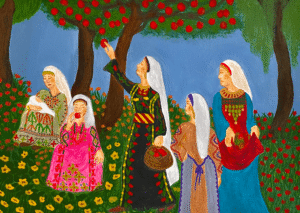
Note on Halima Aziz’s artwork in this issue
The submitted works are painted reflections shaped by encounters, landscapes and inherited stories, as well as by the quiet poetry of nature. Through painting, Halima explores how memory lives within form, colour and texture, and how art can become a space of preservation and remembrance. Her works gently allude to Palestinian life in its many layers. They speak of daily challenges and historical burdens, yet they are equally rooted in beauty, tenderness and perseverance. Within the compositions, moments of stillness, care and human connection emerge, suggesting how life continues despite hardship. They reflect the strength of a people who, even in the face of loss and uncertainty, choose to nurture hope, creativity and dignity. Each work unfolds as an intimate act of visual storytelling. Emotion is held with sensitivity, tradition is honoured with care and cultural continuity is carried forward with quiet resilience. Rather than depicting suffering alone, the works affirm life itself and point toward an enduring hope for peace and for a future shaped by beauty, belonging and the possibility of a gentler world. “As colour and stitch gently unfold, we awaken to the quiet truth that endings seed new beginnings. Through art, we touch memory anew and draw closer to the heart’s home. May this moment of genesis bring peace and remind us that each day offers the chance for our roots to bloom again.” — Halima Aziz